Guy+ Delcambre
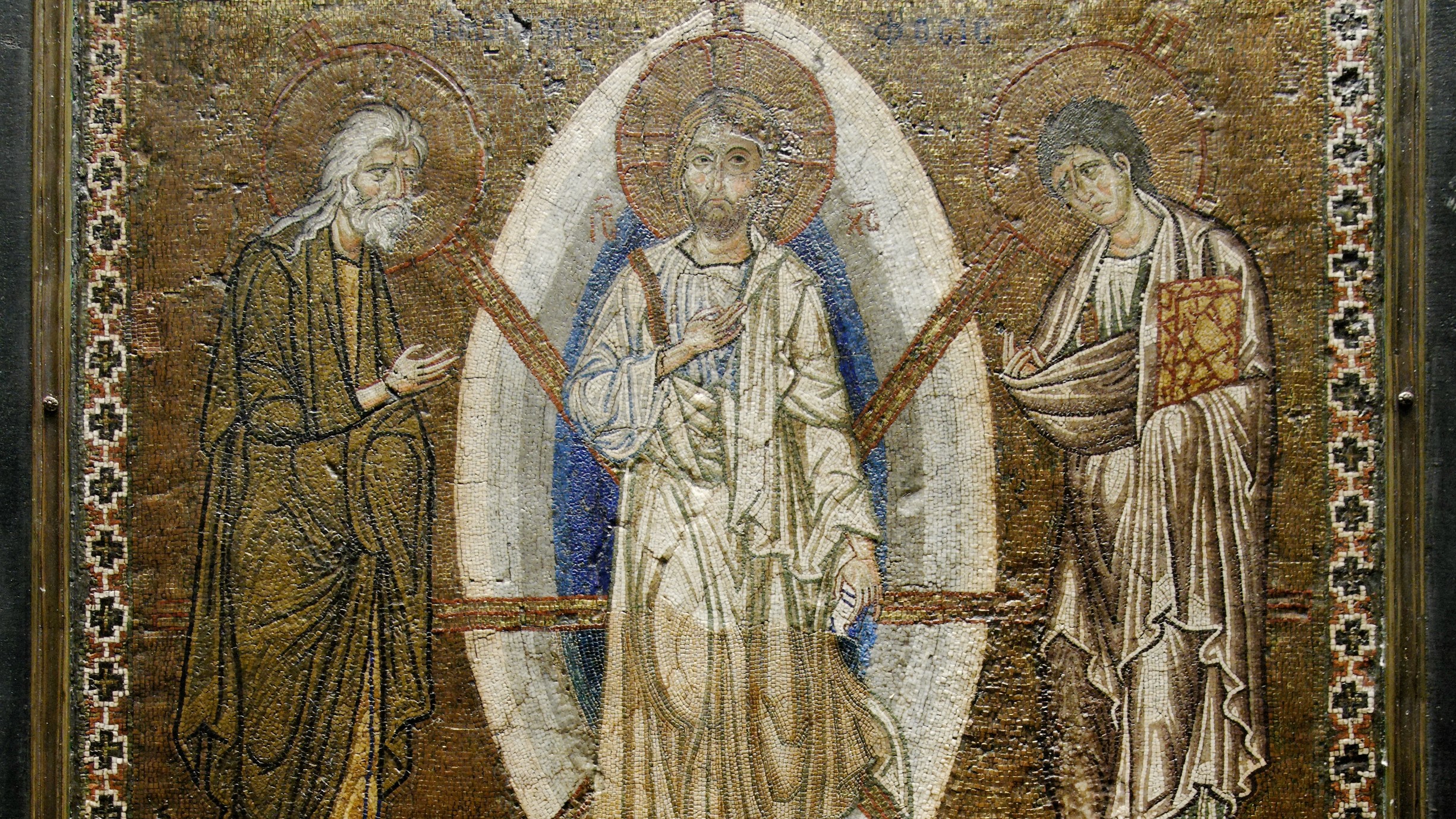
There is a beautiful paradox at the heart of the Christian faith: what God reveals is often concealed until it is embodied in faithful witness. The Feast of the Transfiguration invites us into that mystery. We read that Jesus ascends the mountain with Peter, James, and John. There, for a fleeting moment, suddenly, the veil is drawn back to reveal Christ’s face shining with divine glory. Moses and Elijah appear beside him, representing the fulfillment of the law and the prophets. And then, the Father speaks from the cloud: “This is my Son, my Chosen; listen to him.”
And yet despite this revelation, almost nothing is understood.
Peter’s impulse is to make three honoring dwellings: “Master, it is good that we are here; let us make three dwellings.” If we pause here, we will recognize that impulse to be a familiar one. Whenever God reveals himself, we want to preserve the moment. And often, we aim to build infrastructure to contain what was meant to transform us. In this impulse — to build, to stay, to contain — we misunderstand revelation altogether.
What is revealed is concealed until it is lived.
Even more peculiar is Jesus’ command as they descend: tell no one what you have seen. Why conceal such a magnificent revelation?
Because its meaning cannot yet be known apart from the cross. The glory glimpsed on the mountain will only be understood when Christ’s body is lifted upon another hill. Only then will the disciples discover that divine glory is revealed not through triumph but through cruciform love. What has been revealed remains concealed until it passes through the cross and becomes the life of God’s people.
Revelation is never an end in itself. Glory gives way to mission.
This is why Christian witness is something far deeper than persuasion. We often imagine evangelism as finding the right arguments or saying the right words. But throughout Scripture, God rarely persuades — He reveals. He makes himself known with such beauty and truth that hearts awaken to recognize him. The Church’s vocation and calling is to bear faithful witness to the One she has encountered. Authentic witness is simply revelation embodied.
As I pray for our missional community this season, I find myself praying less that we would become more successful and grow, and more for our desires to be transfigured. That our loves would be reordered by the beauty of Christ. That our imaginations would become captive to his kingdom. It is when our desires are transformed, our lives themselves begin to reveal what our lips proclaim.
This is why the Eucharist stands at the center of our common life.
Every Sunday, the Church ascends the mountain once more. We are gathered by grace and brought into the presence of the living God. In the Scriptures, Christ is revealed as the Father’s beloved Son. At the Table, we receive not merely a reminder of Christ but Christ himself, who gives himself to us under the humble signs of bread and wine. Here again is the paradox of revelation and hiddenness: the glory of God is truly present, though veiled; fully given, though quietly received.
And then, just as surely, we descend.
The liturgy refuses to let us remain on the mountain. Having listened to Christ, confessed our sins, received his mercy, heard his Word, and been nourished by his Body and Blood, we are sent into the world. The dismissal is not the end of worship but its fulfillment. We go to love and serve the Lord because we have first encountered him.
This is the rhythm of Christian mission: revelation, communion, and witness.
We gather not to escape the world but to be formed for it. We receive Christ so that the life of Christ may become visible through us. The Eucharist trains us to recognize him not only at the altar but also in our neighbors, our workplaces, our homes, and our city. Week after week, Christ transfigures ordinary people into a people whose common life quietly reveals his kingdom.
On Sunday evening, August 16, we will gather once again around the Lord’s Table as we begin our fall semester together. My prayer is not simply that we would have a meaningful service, but that Christ would once again reveal himself among us, transfigure our desires, nourish us with his own life, and send us into Dallas as faithful witnesses. For the world does not merely need better arguments. It longs — even if it does not yet know it — for a people whose lives have become illuminated with the quiet glory of Jesus Christ.
May we be those people, through the name of Jesus.
pax Christi,
Guy+